
70% design system chết yểu sau 18 tháng — không phải vì code chất lượng kém mà vì thiếu governance: không có team owner, không có RFC review, không có deprecation cho component cũ, không có communication channel với consumer team. Bài này hướng dẫn 4 governance process bắt buộc (setup DS team owner, RFC cho mọi breaking change, deprecation policy 4 giai đoạn, metric đo health), 4 communication channel cho consumer team, và 5 lỗi governance phổ biến với cách fix cụ thể.
Vì sao 70% design system chết sau 18 tháng?
Khảo sát Stripe Sessions 2023 và Smashing Magazine 2024 cho thấy 70% DS được build nhưng adoption rate dưới 30% sau 18 tháng. Nguyên nhân không phải code chất lượng — đa số DS code OK lúc launch.
Vấn đề ở governance: thiếu team owner, thiếu RFC review, thiếu deprecation cho component cũ, thiếu communication. DS thành “thư viện component không ai dùng” trong repo, sau đó bị fork/branch ở mỗi consumer app, drift không thể recover.
Bảng 5 pain point và hậu quả nếu không fix
| Pain point | Triệu chứng | Hậu quả nếu không fix |
|---|---|---|
| Không có team owner | Bug log không ai handle, response time vô tận | Dev frustrated, build component riêng bypass DS |
| Không có RFC process | Component thêm random, API không consistent | Breaking change phá consumer, trust DS giảm |
| Không có deprecation | Component cũ legacy giữ mãi trong codebase | Codebase bloated, technical debt 6-12 tháng |
| Không có communication | Dev không biết component mới release | Adoption rate dưới 30%, ROI âm vĩnh viễn |
| Không đo metric | Health DS không quantify được | Decision based on gut feeling, không data-driven |
Governance không phải bureaucracy
Governance không có nghĩa là enterprise-style RFC document nhiều trang cho mọi change nhỏ. Mục tiêu là document decision, tránh ad-hoc, đảm bảo consumer được notify trước breaking change.
Team mid dưới 30 dev có thể dùng simplified governance: Notion doc 1 trang cho RFC, GitHub Issue cho bug tracking, Slack #design-system cho async support. Heavy process chỉ cần khi tổ chức trên 100 dev.
Process 1 — Setup DS team owner dedicated
DS không phải side project — cần team dedicated với role rõ ràng. Cho org dưới 100 dev: 2-3 người (DS lead + 1 designer + 1 dev).
Cho org trên 500 dev: 5-10 người team với product manager + tech lead.
Team responsibility: maintain repo, review PR contribution từ consumer, RFC process, support adoption qua office hour và bản tin email.
5 role chuẩn trong DS team
Role split khác nhau theo size org, nhưng 5 role dưới đây bắt buộc có dù người kiêm nhiệm. Org nhỏ 1 người có thể kiêm 2-3 role, org lớn 1 role = 1 FTE.
- DS Tech Lead: architecture decisions, breaking change approval, roadmap quarterly. Senior dev nhiều năm kinh nghiệm.
- DS Designer Lead: visual decisions, accessibility audit, design QA cho contribution. Senior designer nhiều năm.
- DS Dev (1-3 người): implement component, fix bug, write tests, maintain Storybook. Mid-senior dev.
- DS Product Manager: roadmap, prioritization, communication với product team consume DS — chỉ cần ở org trên 100 dev.
- DS Designer (1-2 người): Figma library, component variant, design system documentation maintenance.
Hero developer trap cần tránh
Sai lầm phổ biến nhất là 1 senior dev maintain DS solo. Khi senior này leave công ty, DS chết trong 3-6 tháng vì không ai hiểu sâu codebase.
Giải pháp: distribute knowledge từ ngày đầu. Pair programming cho mọi feature lớn, document every decision trong RFC, rotate review duty giữa team members.
Knowledge phải có 2-3 backup ít nhất.
Process 2 — RFC (Request For Comments) cho mọi breaking change
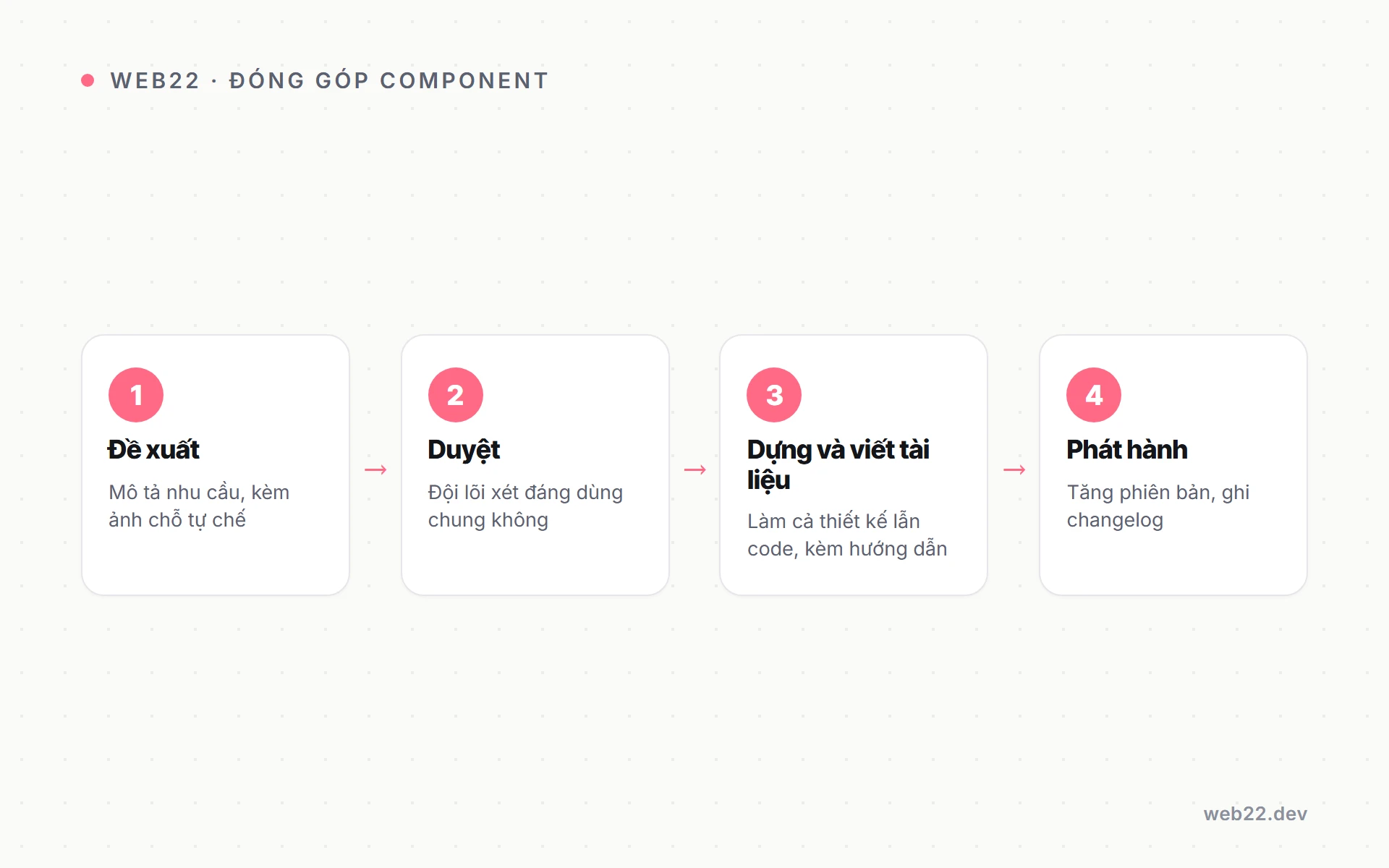
RFC là formal document propose change cho DS. Tất cả breaking change (modify component API, add token mới, deprecate variant cũ) bắt buộc qua RFC.
Anyone propose, DS team review, approve trong 1-2 tuần.
Quy trình này avoid “ad-hoc change → break consumer” — pattern phá trust giữa DS team và consumer rõ rệt nhất.
Template RFC chuẩn 8 section
# RFC Template (copy paste khi propose change)
## 1. Title
[Component name] - [Trao đổi yêu cầu change description]
## 2.
Context
- Vì sao change này cần thiết?
- Ai sẽ benefit (product team A, B)?
- Pain point hiện tại nếu không change?
## 3. Proposed Change
- Spec mới (Figma link + code snippet)
- API breaking change: yes/no
- Migration path cho consumer hiện tại
## 4.
Alternatives Considered
- Option A: ... (pros/cons)
- Option B: ... (pros/cons)
- Why chosen approach over alternatives
## 5. Implementation Plan
- Giai đoạn 1: build new variant (1 week)
- Giai đoạn 2: add to docs + Storybook (3 days)
- Giai đoạn 3: deprecate old variant (2 weeks notice + 6 month grace)
- Giai đoạn 4: remove old variant (after grace period)
## 6.
Migration Guide
- Codemod available: yes/no
- Manual steps for consumers
- Estimated migration time per consumer
## 7. Approval
- [ ] DS Tech Lead
- [ ] DS Designer Lead
- [ ] At least 2 consumer team representatives
- Approval tiến độ: 1-2 weeks
## 8.
Tracking - Github Issue: #1234 - Storybook PR: #5678 - Migration progress dashboard: link
Khi nào KHÔNG cần RFC
RFC tốn 2-5 ngày work từ proposer + reviewer. Không phải mọi change đều cần — over-RFC gây fatigue và slow velocity.
- Bug fix không thay đổi API: sửa color sai, fix layout vỡ mobile — direct PR, không cần RFC.
- Add prop optional với default value: backward compatible, không break consumer hiện tại.
- Internal refactor không expose API: đổi state management bên trong component nhưng API public không đổi.
- Doc update: sửa typo, thêm example — PR direct, không cần RFC.
Process 3 — Deprecation policy 4 giai đoạn với grace period
Component cũ phải có path deprecate rõ — không xoá đột ngột break consumer. Pattern chuẩn: announce deprecation 6 tháng trước remove.
Trong period đó: console warning, codemod available, migration guide đầy đủ.
Sau 6 tháng: hard remove. Pattern này được Stripe, Shopify, GitHub áp dụng — proven giảm complaint từ consumer team.
4 giai đoạn deprecation lifecycle
Mỗi giai đoạn có signal khác nhau cho consumer biết mức độ cảm giác cấp thiết migrate. Giai đoạn 1-2 chiếm 90% lifecycle, giai đoạn 3-4 là final push để force migration.
- Giai đoạn 1 (Active): component đang stable, recommended. Không có warning, no deprecation notice.
- Giai đoạn 2 (Soft deprecated, 6 tháng): còn work nhưng emit console warning. Vd
console.warn('Button v1 deprecated, migrate to Button v2 by 14/05/2026'). - Giai đoạn 3 (Hard deprecated, 1 tháng): import vẫn work nhưng red warning everywhere, IDE TypeScript shows deprecated. Final notice trước remove.
- Giai đoạn 4 (Removed): import fail, build break. Force migrate.
- Có codemod auto-fix nếu API tương đương.
Codemod tự động giảm migration cost
Codemod là script tự động sửa code consumer từ API cũ sang API mới. Vd jscodeshift transform <Button type="primary"> sang <Button variant="primary">.
Codemod cover 60-80% migration cases, 20-40% manual cho edge case. ROI codemod cao: dev DS team viết 1-2 ngày, consumer team save 5-15 ngày × số app.
Tổ chức 5 app consumer = 25-75 ngày tiết kiệm.
Process 4 — 5 metric đo health DS hàng tháng
Decision data-driven, không gut feeling. 5 metric quan trọng nhất theo dõi monthly: adoption rate, contribution count, deprecation tickets, bug resolution time, satisfaction score.
Bảng 5 metric với target benchmark
# DS Health Metrics Dashboard
1. ADOPTION RATE
Definition: % component DS / total component dùng trong product
Calculation: count(import from @ds/) / count(all component imports)
Target: trên 70% sau 6 tháng, trên 85% sau 12 tháng
Tool: ESLint custom rule + monthly audit script
2.
CONTRIBUTION COUNT
Definition: PR từ consumer team / total PR vào DS repo
Target: 30%+ contribution external (DS team không dominant 100%)
Healthy: federated model với consumer đóng góp
Unhealthy: 100% PR từ DS team = silo
3. DEPRECATION TICKETS
Definition: open ticket về deprecated component
Target: dưới 10 open tickets
Action: nếu trên 20 tickets, RFC review để rebuild component
4.
BUG RESOLUTION TIME (P50, P95) Definition: median + 95th percentile time to fix bug Target: P50 dưới 5 ngày, P95 dưới 14 ngày SLA: critical bug (block production) dưới 48 giờ 5. SATISFACTION SCORE (NPS-style) Survey consumer team quarterly: - "DS có giúp ship feature nhanh hơn?" (NPS scale 0-10) Target: NPS score trên 30 Action: nếu dưới 0, retrospective + roadmap pivot
Adoption rate là leading indicator quan trọng nhất
Adoption rate là metric quan trọng nhất — 4 metric còn lại không meaningful nếu adoption thấp.
DS có 50 component perfect nhưng chỉ 20% được dùng = ROI âm.
Đo adoption qua script grep import path mỗi tháng: grep -r "from '@org/ui'" src/ | wc -l chia cho total component import. Setup script chạy weekly trong CI, output dashboard Notion hoặc Airtable.
Action threshold cho mỗi metric
Mỗi metric cần có action threshold rõ ràng — không chỉ track passive. Khi metric vượt threshold, DS team trigger workflow cụ thể trong 1-2 tuần.
- Adoption dưới 50% sau 3 tháng: spawn dedicated rollout sprint, pair với 2 consumer team migrate.
- Contribution dưới 10% sau 6 tháng: review DX, simplify contribution guide, mở office hour weekly.
- Bug P95 trên 21 ngày: add 1 dev vào DS team, audit backlog process.
- NPS dưới 20: survey deeper qua 1-on-1 interview 5-10 consumer dev, identify root cause.
4 communication channel essential cho DS team
Adoption tăng khi consumer dễ access support. Setup 4 channel: Slack chat, monthly office hour, quarterly roadmap, weekly bản tin email.
Reduce friction — consumer hỏi, DS team trả lời trong dưới 24 giờ.
Slack #design-system cho async support
Channel Slack riêng cho mọi câu hỏi DS — bug report, FAQ, "component này dùng prop gì". Response time target dưới 4 giờ trong giờ làm việc Việt Nam (9h-18h).
Pin 3 thread quan trọng: link Storybook docs, link RFC template, link migration guide đang active. Dev tự self-serve qua docs trước khi hỏi, giảm câu hỏi repeat.
Monthly office hour 1 giờ drop-in Q&A
Office hour 1 giờ/tháng, drop-in Q&A với DS team. Calendar invite cho mọi product team.
Format: 10 phút DS team demo component mới, 50 phút Q&A từ consumer.
Record session upload Notion cho team không tham gia được. Office hour quan trọng cho team distributed/remote — face-to-face giảm friction hỏi async.
Quarterly roadmap review + weekly bản tin email
Hai channel sau cover communication chiến lược và tactical. Mỗi channel có audience khác nhau và cadence khác nhau.
- Quarterly roadmap review: public buổi gặp 1 giờ, consumer team phản hồi priority cho Q tới. Vote component nào build trước.
- Weekly bản tin email: changelog tuần, new component, deprecation reminder, success story team adopt DS.
- Internal blog post: câu chuyện khách sâu khi consumer team adopt DS thành công — share workflow, before/after metric.
- Demo Friday: consumer team demo cách họ dùng DS, DS team học lại từ real usage.
5 lỗi governance phổ biến và cách fix
Web22 audit 12 dự án DS production từ 2023-2025, 5 lỗi dưới đây xuất hiện ở 9/12 dự án. Fix sớm tránh DS chết yểu — cost rework sau 12 tháng cao gấp 5 lần so với setup process đúng từ đầu.
Lỗi 1 — DS team isolated tower
DS team không nghe consumer team, build feature theo wishlist nội bộ. Triệu chứng: release nhiều component nhưng adoption thấp, consumer phàn nàn "component không cover use case của tôi".
Giải pháp: rotate consumer team representative trong DS team review meetings. Mỗi quarter có 1-2 consumer dev join DS planning buổi gặp, mang context use case thật về.
Lỗi 2 — Breaking change không announce trước
Consumer wake up morning, DS update break their build trong production. Trust giữa DS team và consumer bị tổn thương vĩnh viễn — khó recovery sau 2-3 incident.
Giải pháp: enforce RFC + 6 tháng grace period. Major version bump chỉ release sau khi 100% consumer apps đã migrate trong staging.
Auto-bot post Slack notification 30 ngày, 14 ngày, 7 ngày trước removal.
Lỗi 3 — Component cồng kềnh 200+ với adoption 20%
DS team thêm component theo wishlist không có data backing. 200+ component sau 18 tháng, audit thấy 80% component có adoption dưới 5%.
Giải pháp: prune component dưới 5% adoption sau 12 tháng. Focus 50 core components có adoption cao.
Less is more — Shadcn UI thành công với 50 component well-crafted hơn Material UI 100+ component.
Lỗi 4-5 — Hero developer và theme drift
Hai lỗi cuối liên quan tới resilience và governance enforcement. Cả 2 đều có thể fix qua process change trong 1-2 sprint.
- Hero developer trap: 1 senior dev maintain DS solo, leave công ty → DS dies. Giải pháp: distribute knowledge, document everything, pair programming, rotate review duty.
- Theme drift: consumer team override token cho riêng product → drift visual trong 6-12 tháng. Giải pháp: ESLint rule "no-token-override", code review enforce, audit visual regression weekly.
Federated model cho org lớn 100+ dev
Khi tổ chức scale lên 100+ dev, central DS team không thể handle mọi contribution. Federated model: consumer team đóng góp component vào DS, DS team review + approve.
Pros: scale faster, ownership distribute, consumer team feel ownership. Cons: cần governance mạnh để đảm bảo consistency cross-contribution.
Phù hợp org trên 100 dev với DS đã mature nhiều năm.
Câu hỏi thường gặp
DS team size cho org 50 dev là bao nhiêu?
2-3 người dedicated full-time (1 lead, 1 designer, 1 dev) đủ cho org 50 dev với 1-3 product. Org trên 200 dev: 5-7 người.
DS team size scale theo product complexity, không chỉ dev count.
Tổ chức multi-tenant với 5+ brand variant cần thêm 1-2 designer cho brand customization. Tham khảo đầu tư design system để hiểu cost model team theo size.
Federated model là gì và khi nào áp dụng?
Federated DS = consumer team đóng góp component vào DS, không phải chỉ DS team. DS team review + approve qua RFC process.
Pros: scale faster, ownership distribute cross-team.
Cons: cần governance mạnh để đảm bảo consistency, RFC process chặt chẽ. Phù hợp org trên 100 dev với DS đã mature nhiều năm.
Org nhỏ skip federated, dùng central model.
Bao lâu thấy ROI từ governance investment?
12-18 tháng. ROI hiện ở: dev velocity (ship feature nhanh hơn 30%), design QA reduction (-50% review cycles), bug rate giảm (consistent component = ít bug edge case).
Trước 12 tháng cost vận hành governance trên benefit, sau đó break-even rồi positive. Patience là yếu tố quan trọng — kill governance ở tháng 9 = lãng phí investment.
RFC quá nặng cho team nhỏ phải làm sao?
Cho team dưới 10 dev: simplified RFC (Notion doc 1 trang) đủ. Tránh enterprise-style RFC document nhiều trang cho org nhỏ.
Goal là document decision, không formality. Cover 5 section: Context, Proposed Change, Migration Path, Approval, Tracking.
Skip "Alternatives Considered" và "Implementation Plan" nếu change nhỏ.
Tool track adoption rate nào dễ setup?
Custom script chạy weekly: scan codebase grep import từ @ds/, count vs total component import. Output dashboard Notion/Airtable.
Setup 1-2 ngày cho dev senior.
Plugin DS Adoption Tracker cho VS Code (free) cũng có. Cho enterprise: build tool có analytics built-in như Bit hoặc Zeroheight.
Chi tiết về component library có pattern setup ESLint rule track adoption.
Khi nào nên kill design system thay vì fix governance?
Kill khi: adoption rate dưới 20% sau 24 tháng, NPS satisfaction dưới 0 cross-team, business priority shift sang single product không cần DS.
Don't kill khi: adoption đang trend up dù chậm, có 1-2 product team adopt thành công, governance pain rõ ràng và có giải pháp. Kill DS không xấu — sunk cost fallacy đắt hơn nhiều so với restart đúng.
Cần setup DS governance + RFC process + metric dashboard turnkey trong 4-6 tuần, tham khảo Dịch vụ thiết kế UI/UX chuẩn doanh nghiệp tại Web22 — chúng tôi audit governance hiện trạng, đề xuất 4 process bắt buộc, setup metric dashboard và đồng hành 3-6 tháng đầu tới khi DS adoption rate trên 70%.